Why Grape Varieties Matter
And why we use their names on labels

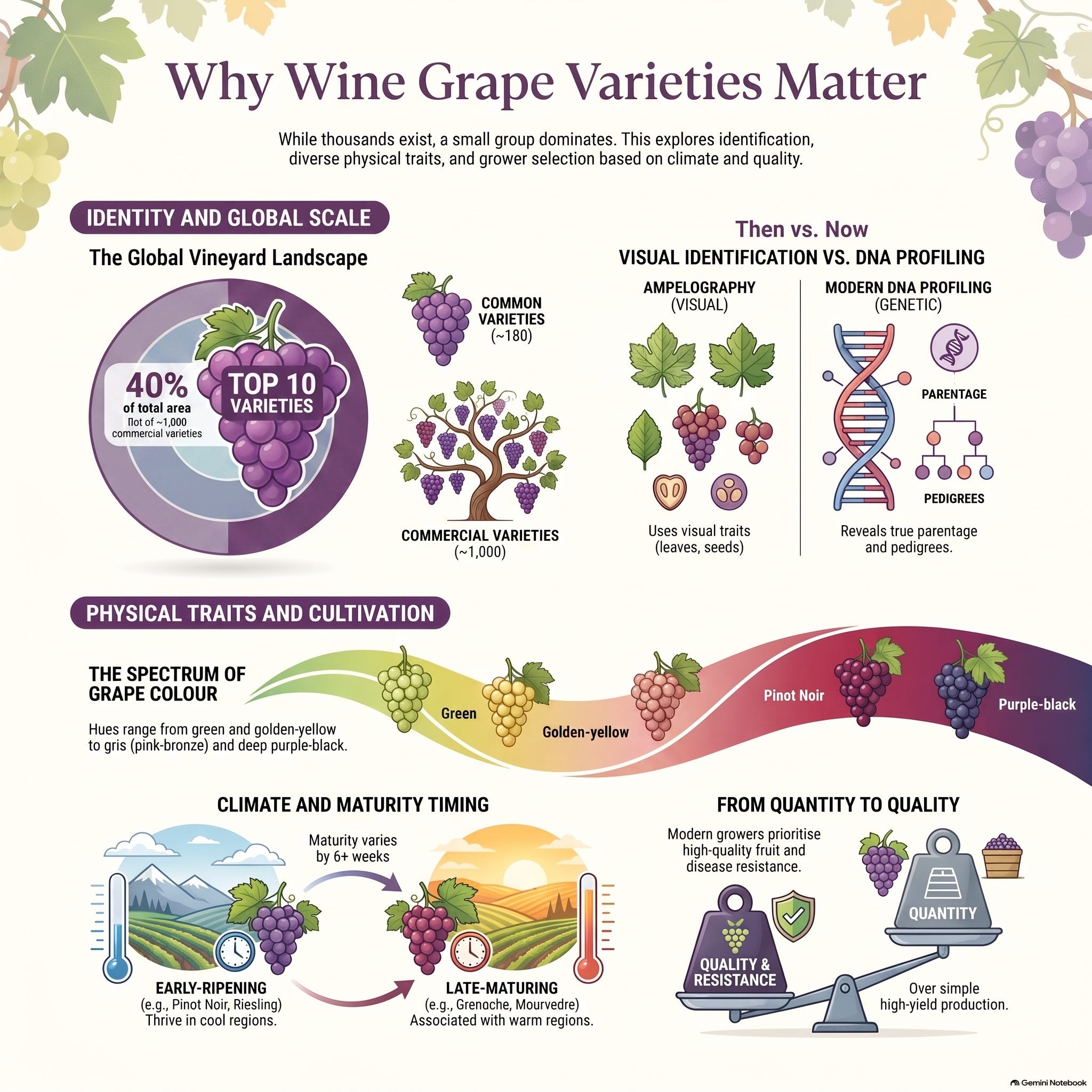
There are thousands of different grape varieties used to make wine. About a thousand are used commercially somewhere in the world. About 180 are used fairly commonly, while the top ten make up about 40% of the area planted with grapes worldwide.
This article is updated from the third edition of the book Emerging Varietal Wines of Australia, based on the Vinodiversity website and published in late 2014.
Grape varieties differ in many characteristics that may or may not be of interest to the grape grower, the winemaker and, finally, the consumer.
Virtually every characteristic of the grapevine and the grape itself differs from one variety to another. Ampelographers—people skilled at vine identification—use factors such as the shape and size of shoots, leaves, bunches, individual grapes and seeds to distinguish between varieties.
Ampelograpy was always a slightly inexact science. There were numerous cases of mistaken identity. Some varieties had dozens of synonyms; the same name was used for several different unrelated varieties.
Since the mid-1990s, however, DNA profiling has been commonly used. It provides an objective method of identification and, as a bonus, reveals parent-offspring or sibling relationships between varieties. As a result, quite elaborate pedigrees for grape varieties can be constructed. Many of these are illustrated in Jancis Robinson’s beautiful book Wine Grapes.
Grape skin colour
The most obvious difference between varieties is the skin colour of the grape. In simple terms, varieties are either red or white (really dark purple or green). In fact, there are gradations of colour: many shades of green through to quite golden-yellow skin, various pinkish-bronze colours often called gris or grey, and various hues in the red, purple and black spectrum.
Time to Maturity
Perhaps the next most significant trait from the grape grower’s point of view is the time to maturity. Some wine grape varieties ripen much earlier than others, by up to six or more weeks in some climates. Late-maturing varieties, for example, Grenache or Mourvedre, will not ripen at all in cold wine-growing regions.
Early-maturing varieties such as Pinot Noir and Riesling will ripen in hot climates, but grapes that ripen in very hot conditions usually do not make good wine. For this reason, early-ripening varieties are most commonly found in cool to cold wine regions.
Quality versus quantity
Over the centuries, grape growers have selected varieties that give high yields in their particular region, but over the past few decades, wine quality has become more important than quantity.
Other Considerations
Grape varieties also differ widely in their susceptibility or resistance to disease. This is especially important in areas with summer and autumn rain, which creates conditions suitable for the spread of fungal diseases.
Commercial considerations also play a part. Broad cultural attitudes play a huge role in what varieties are grown in particular regions. Wine consumers expect wineries in a particular region to use flagship varieties – Shiraz in the Barossa, Cabernet Sauvignon in Coonawarra, but these factors are becoming less important.
Varietal Naming of Wine
Until the middle of the twentieth century, wine consumers knew little about grape varieties. Wine was marketed under the names of styles, regions and producers and, often, the names of merchants.
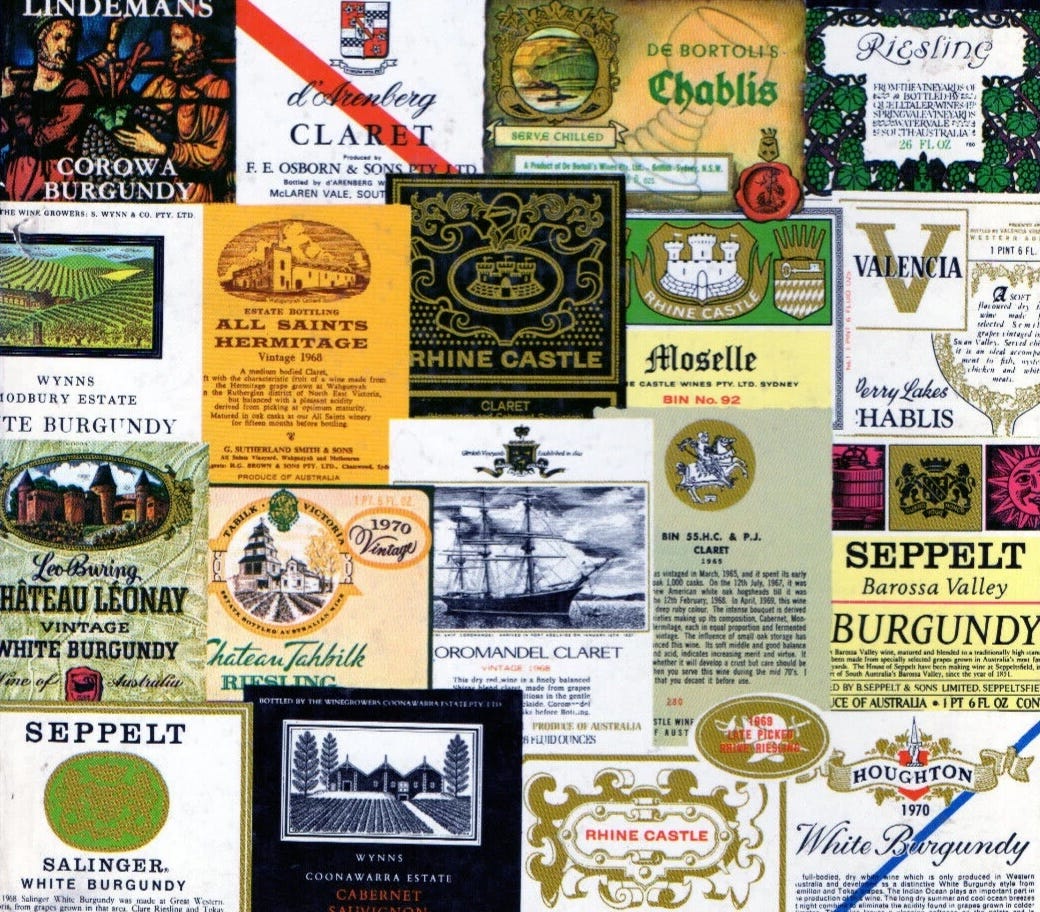
In Australia, for example, wines were frequently labelled Moselle, Hock, White Burgundy’ or Chablis for whites, and Claret, Burgundy and Hermitage for reds. These names were taken from European regions and were supposed to indicate the style of wine. This practice was at best misleading and eventually ran foul of international trade agreements.
These days the grape variety used to make a wine is prominently displayed on the label, and consumers are much more aware of grape varieties. Many consumers don’t even realise that the names of their favourite wines, say Chardonnay or Shiraz, are actually the names of grape varieties.
There are downsides to varietal labelling. Less sophisticated wine drinkers are often more interested in the style of wine than in the varietal composition. Not all wines made from a particular variety taste alike. Back in the 1970s we knew that Australian ‘Moselle’ was likely to be sweet or at least off-dry, but Australian ‘Hock’ would be dry.
Varietal labelling does little to indicate whether a wine is dry, off-dry or sweet. Another problem is that varietal labelling leads many people to think that straight varietal wines are somehow superior to blends. This is not always the case, but the preference for straight varietals seems deeply embedded in Australian consumers’ psyches.
This is a free article. Paid subscribers support my work in promoting diversity in the Australian wine; diversity in varieties, regions and styles, and promoting smaller and innovating producers. You can help by upgrading your subscription or making a one-off contribution or by ‘buying me a glass of wine’ for $5.00
or
The next Taste and Talk will be at 5pm on Thursday, 20th August. Join us via Zoom.
Theme: Small Wine Producers
What is your favourite small winery? Get yourself some of their wine and be prepared to talk about it. In the meantime, comment below to get the conversation off to a flying start.